Looking for a Manhattan home that feels both historic and highly livable? Tribeca loft living stands apart because it blends old commercial architecture with modern residential comfort in a way few neighborhoods can match. If you are trying to understand what makes a Tribeca loft different, this guide will help you see how the buildings, streetscape, and daily lifestyle come together. Let’s dive in.
Why Tribeca Feels Like a True Loft Neighborhood
Tribeca’s identity is tied to its past as a commercial district shaped by warehouses, wholesale dry goods buildings, and store-and-loft structures. The neighborhood sits within Manhattan Community District 1 and includes multiple historic districts, including Tribeca East, Tribeca North, Tribeca South, Tribeca South Extension, and Tribeca West.
That history still shows up in the built environment. The neighborhood name may date to the 1970s, but Tribeca’s physical character comes from much older mercantile blocks that were designed for commerce first and adapted for residential life later.
Another important layer is the Special Tribeca Mixed Use District. Its purpose includes maintaining stable industry alongside controlled residential use, which helps explain why Tribeca still feels distinct from more purely residential neighborhoods downtown.
What Defines a Tribeca Loft
The classic Tribeca loft starts with the store-and-loft building type. Landmark reports describe rows of mid-19th-century mercantile buildings with cast-iron storefront framing, brick or stone facades, and commercial styles such as Italianate and Second Empire.
These buildings were originally designed for storage, selling goods, and large open interior areas. That original function still shapes how many homes feel today, even after full renovation.
In practical terms, that often means:
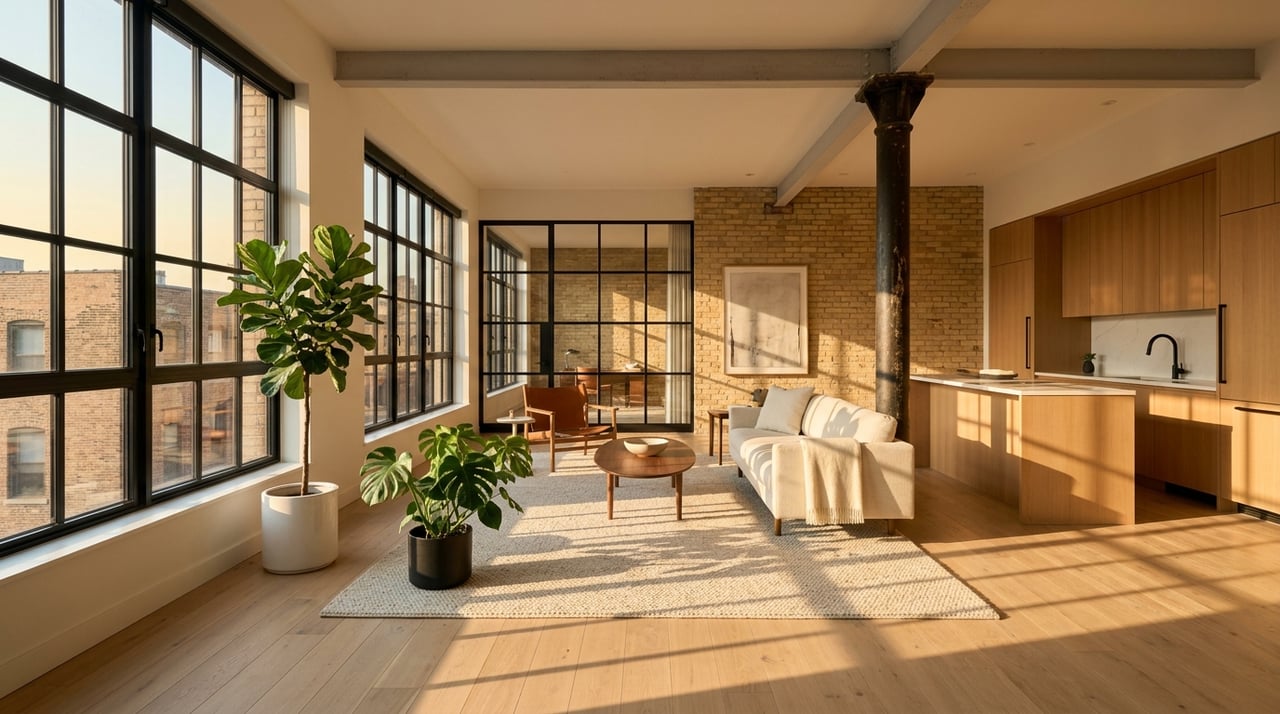
- Large, open living areas
- Deep floor plates
- Big windows
- Flexible room layouts
- A strong sense of volume and scale
If you are comparing Tribeca lofts with more conventional apartments, this is often the biggest difference. The underlying structure can allow for wide living rooms, more adaptable planning, and sleeping areas that feel separate without losing openness.
Why the Architecture Matters Day to Day
Tribeca’s architecture is not just something you notice from the sidewalk. It affects how you experience the home once you are inside.
Large windows and broad commercial facades can bring in strong natural light. Open interior spans can make entertaining easier and give you more options for how you use the space. Even when a loft has been modernized with contemporary finishes, the original proportions often remain part of its appeal.
At the street level, many buildings still show commercial-era details like display-oriented bases, rolling shutters, transoms, vault lights, and ironwork. Across the neighborhood, these repeated features create a cohesive streetscape that feels consistent rather than random.
That consistency is a big part of Tribeca’s appeal. It is less about one isolated landmark building and more about block-after-block architectural continuity.
Historic Districts and Modern Living
One reason Tribeca feels so visually intact is that many of its blocks fall within designated historic districts. Landmark designation protects historic character and requires review for alterations, reconstruction, demolition, and new construction that affects designated buildings.
That does not mean the neighborhood is frozen in time. In practice, it helps preserve the exterior character while still allowing buildings to evolve and support updated interiors and contemporary residential use.
For you as a buyer, that often means a mix that is hard to find elsewhere. You may get a home with modern systems and renovated interiors inside a building that still contributes to a historic Manhattan streetscape.
What Daily Life in Tribeca Feels Like
Tribeca’s lifestyle is shaped by a broad mix of local businesses rather than one single retail corridor. The neighborhood includes independent shops, restaurants, galleries, wellness studios, and everyday services that support regular routines.
That mix gives the area activity without making it feel centered on nightlife. For many buyers, that balance is part of the draw.
You can usually expect a neighborhood experience that includes:
- Convenient street-level services
- Dining woven into residential blocks
- A strong local-business presence
- A quieter feel than more visitor-driven downtown areas
This makes Tribeca read as established and lived-in. It feels active, but not overly hectic.
The Hudson River Park Advantage
One of Tribeca’s biggest nearby amenities is Hudson River Park. According to the park’s official materials, it spans 550 acres along Manhattan’s west side and stretches four miles from the northern boundary of Battery Park City in Tribeca to West 59th Street. The park is open from 6:00 AM to 1:00 AM unless otherwise posted.
That scale matters in everyday life. The waterfront is not just a backdrop. It functions as usable open space for biking, recreation, public programming, dog parks, river access, and regular walks.
For many residents, this adds an outdoor dimension that can be hard to find in dense parts of Manhattan. Early morning exercise, after-work walks, and quick access to the riverfront often become part of the weekly routine.
Tribeca vs. Other Downtown Neighborhoods
Tribeca or SoHo?
Tribeca and SoHo share industrial loft roots, but they do not feel the same in practice. Official district descriptions of SoHo emphasize its role as both a residential neighborhood and a major shopping destination.
Tribeca, by contrast, is better understood through its store-and-loft blocks, wholesale origins, and neighborhood-service mix. If you want a downtown setting that feels more home-oriented and generally quieter, Tribeca may be the better fit. If you want a more retail-forward, visitor-heavy environment, SoHo may feel more aligned.
Tribeca or the Village?
The comparison with Greenwich Village and the West Village is also useful. Village architecture is more closely associated with early residential buildings, row houses, lower-scale streets, and a more intimate pattern of development.
Tribeca offers a different kind of historic experience. It leans toward warehouse blocks, cast-iron commercial buildings, and larger-format living spaces. If you are drawn to loft dimensions and an industrial architectural identity, Tribeca often stands apart.
Who Tribeca Loft Living Suits Best
Tribeca loft living tends to appeal to buyers who care about space, layout flexibility, and architectural character. It can be especially compelling if you want a home that feels substantial and adaptable rather than tightly compartmentalized.
It may also appeal to buyers looking for a downtown neighborhood that balances prestige, privacy, and convenience. Recent third-party reporting has placed Tribeca among New York City’s priciest neighborhoods, with median sale prices in the high $3 million range in 2025 and early 2026 depending on the data set and time period used.
That pricing context reinforces what many buyers already sense. Tribeca is not just buying a home. It is buying into a specific kind of residential experience shaped by architecture, location, and limited supply.
What to Look for in a Tribeca Loft
Not every loft offers the same living experience, even within the same neighborhood. If you are evaluating options, it helps to focus on both the visible design and the underlying building characteristics.
Key things to consider include:
- Window size and natural light
- Depth and shape of the floor plate
- Flexibility of the layout
- Extent of interior renovation
- Historic character retained in the building
- Relationship to street activity and nearby services
- Access to the waterfront and west side open space
In a neighborhood like Tribeca, details matter. Two homes can have similar square footage but feel very different depending on proportions, light, and how the loft structure has been used.
Why Local Guidance Matters in Tribeca
Tribeca is one of those neighborhoods where the nuances matter as much as the headline. A loft’s value is often tied to factors that go beyond finishes, including building type, block character, layout utility, and how the home fits into the broader neighborhood fabric.
That is why informed guidance can make a real difference. When you understand how architecture, historic context, and day-to-day lifestyle intersect, you can evaluate Tribeca properties with much more confidence.
If you are thinking about buying or selling in Tribeca, The Ziv, Gottlieb, Bernstein Team brings a strategic, analytical approach to Manhattan real estate and can help you navigate the neighborhood with clarity.
FAQs
What makes Tribeca loft living different from a standard apartment?
- Tribeca lofts often come from former store-and-loft or warehouse-style buildings, so they may offer larger open spaces, deeper layouts, bigger windows, and more flexibility than conventional apartments.
Why does Tribeca have so many loft-style homes?
- Tribeca developed as a commercial district with warehouses and mercantile buildings, and many of those older structures were later adapted for residential use.
Do Tribeca historic districts prevent interior updates?
- No. Landmark designation protects historic character and requires review for certain exterior changes, but buildings can still support updated interiors and contemporary residential living.
Is Tribeca more residential than SoHo?
- In general, yes. Based on official district descriptions, Tribeca tends to feel more home-oriented and service-driven, while SoHo is more associated with shopping and heavier visitor activity.
What outdoor amenity is most important near Tribeca?
- Hudson River Park is a major nearby amenity, offering extensive waterfront open space, recreation, biking, public programming, and river access along Manhattan’s west side.
Is Tribeca considered an expensive Manhattan neighborhood?
- Yes. Recent third-party market trackers have placed Tribeca among New York City’s priciest neighborhoods, with reported median sale prices in the high $3 million range depending on the source and time frame.